
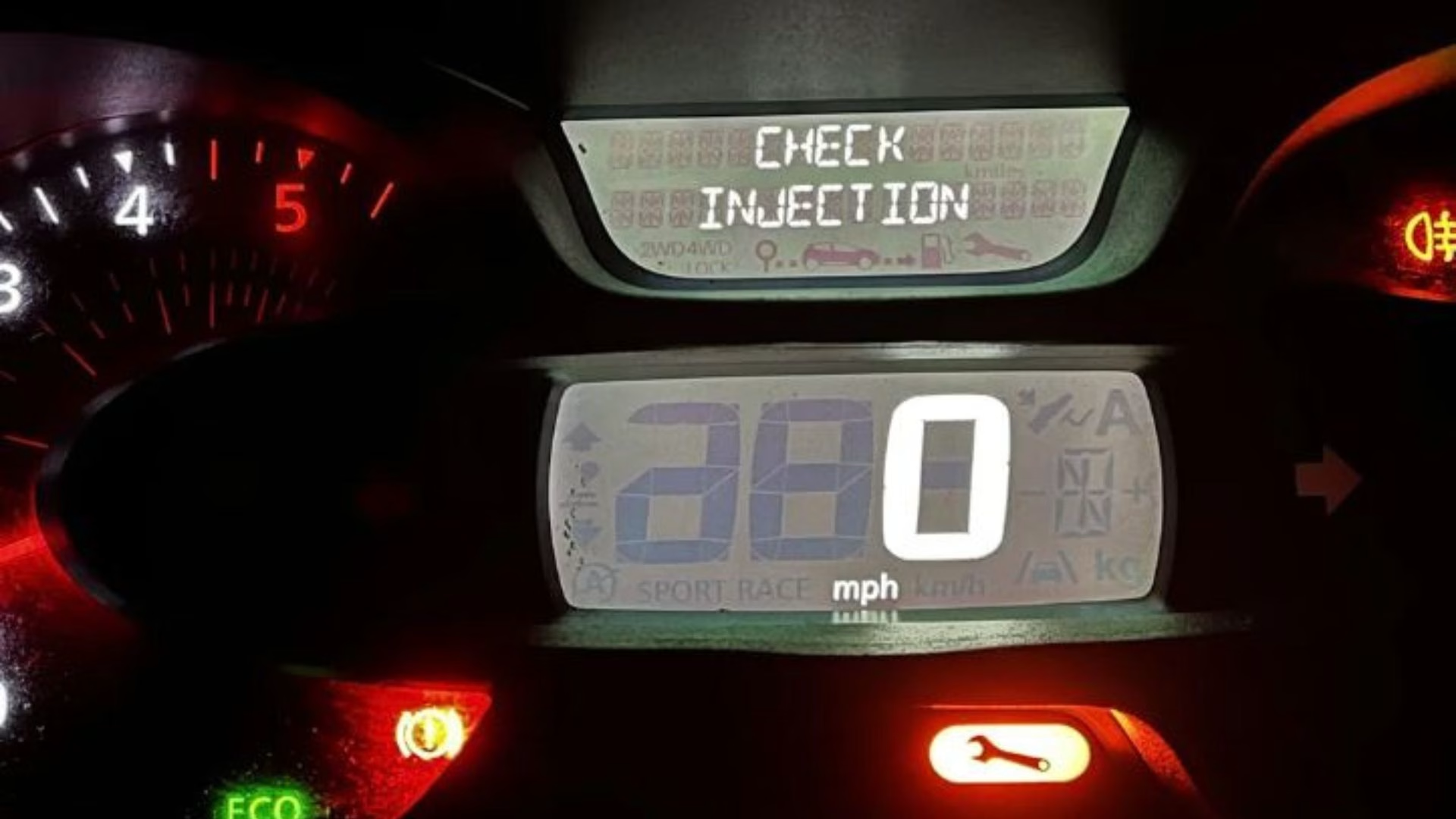
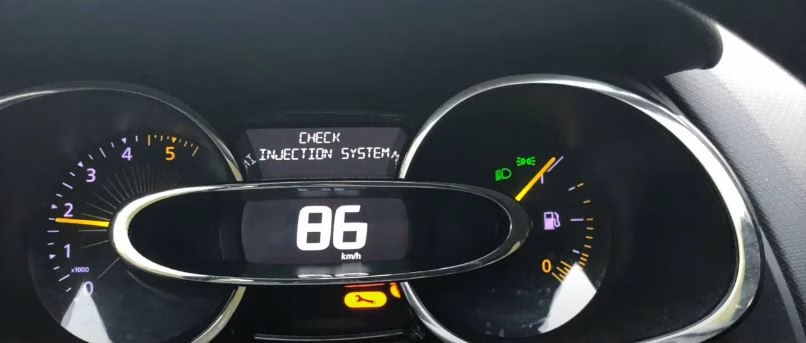
The “Check Injection System Renault” warning in your Renault indicates a fault in the fuel injection system, which could affect engine performance. This system is responsible for delivering fuel efficiently to the engine. Common causes include issues with fuel injectors, pumps, or sensors.
Ignoring the warning may lead to poor performance and costly engine damage. It’s essential to address the issue promptly to avoid further damage. Acting early helps maintain your car’s efficiency and prevent expensive repairs.
What Does “Check Injection System” Mean in Renault?
The “Check Injection System” warning appears when your Renault’s Engine Control Unit (ECU) detects a fault affecting fuel delivery or combustion. This message indicates problems with fuel injectors, pumps, sensors, or related components. The warning serves as an early alert to prevent further damage and maintain optimal engine performance.
If the engine runs normally without power loss, you can drive cautiously to a garage. However, if you experience jerking, significant power loss, or irregular engine running, stop the vehicle immediately. On Renault Scénic and Mégane models, the warning combined with limp mode indicates serious injection faults requiring urgent professional diagnosis.
Common Symptoms of Check Injection Faults
When the warning appears, your Renault displays several noticeable signs indicating fuel system problems:
- Poor Acceleration: Sluggish response or struggling to speed up indicates malfunctioning fuel injectors or pumps
- Rough Idling: Shaky or uneven idle suggests improper fuel flow to the engine
- Stalling or Engine Misfire: Unexpected stalling or misfires result from disrupted fuel injection
- Increased Fuel Consumption: Sudden drop in fuel efficiency points to fuel delivery issues
- Limp Mode Activation: Engine power restriction to prevent further damage
- Black Exhaust Smoke: Excessive smoke indicates improper fuel combustion
- Loss of Power at High RPM: Power loss when accelerating or exceeding 3000 RPM
What Causes the Check Injection System Warning in Renault?
Multiple components can trigger the check injection system warning. Understanding these causes helps identify the specific problem affecting your vehicle.
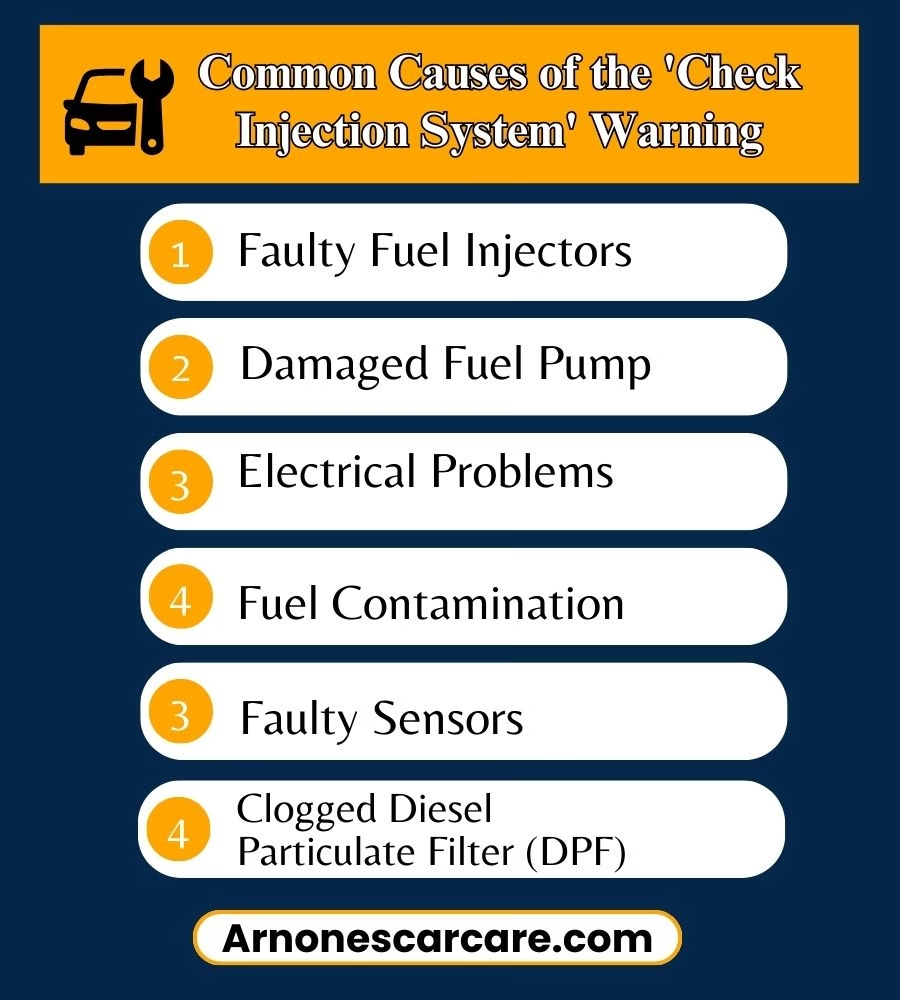
1. Faulty Fuel Injectors
fuel injectors are responsible for spraying fuel into the engine. If they become clogged or malfunction, they can disrupt the fuel flow, leading to poor engine performance, rough idling, or increased fuel consumption. Replacing a faulty injector is essential to restore proper fuel delivery.
2. Damaged Fuel Pump
The fuel pump delivers fuel from the tank to the engine. If it fails, the engine may not get enough fuel, causing poor acceleration, stalling, or difficulty starting. A damaged fuel pump should be replaced to avoid serious engine problems.
3. Electrical Problems
A malfunction in the electrical system can also trigger the “Check Injection System” warning. Loose wires, damaged connectors, or faulty sensors can disrupt the flow of power to the fuel system, affecting how the injectors and pump function. A thorough inspection of the electrical system can often reveal the issue.
4. Fuel Contamination
If your fuel contains dirt, water, or other impurities, it can clog the injectors and disrupt fuel delivery. This can lead to poor engine performance and efficiency. Regularly replacing your fuel filter and ensuring clean fuel can help prevent this problem.
5. Faulty Sensors
Your Renault has multiple sensors that help regulate the fuel system, such as the oxygen, MAP (Manifold Absolute Pressure), and MAF (Mass Airflow) sensors. When these sensors fail, they send incorrect data to the Engine Control Unit (ECU), which can lead to injection errors and poor engine performance. Replacing faulty sensors is key to fixing the issue.
6. Clogged Diesel Particulate Filter (DPF)
For diesel engines, a clogged DPF can be a common culprit. This filter collects soot and other particles, and if it gets blocked, it can cause issues with the exhaust flow and affect the fuel injection system. Regular cleaning or replacing the DPF can help avoid this issue and keep your engine running smoothly.
Common Fault Codes for Renault Injection Problems
Renault vehicles feature OBD2 diagnostic compatibility, allowing connection of a diagnostic scanner to read fault codes. These codes pinpoint the specific component causing the check injection warning. Common fault codes include:
- P0087: Fuel rail pressure too low
- P0235: Turbocharger boost sensor A circuit malfunction
- P0299: Turbocharger underboost condition
- P0381: Glow plug/heater indicator circuit malfunction
- P0401: EGR flow insufficient
- P0488: EGR valve fault
- P2002: DPF efficiency below threshold
- P242A: Exhaust gas temperature sensor circuit fault
- DF651: Turbine upstream pressure sensor circuit fault
Using an OBD2 scanner, you can read fault codes yourself and understand why the check injection warning appeared on your Renault Clio, Mégane, or Captur.
How to Diagnose the ‘Check Injection System’ Fault?
Early diagnosis prevents minor issues from becoming expensive repairs. Follow these diagnostic steps:
Using an OBD-II Scanner
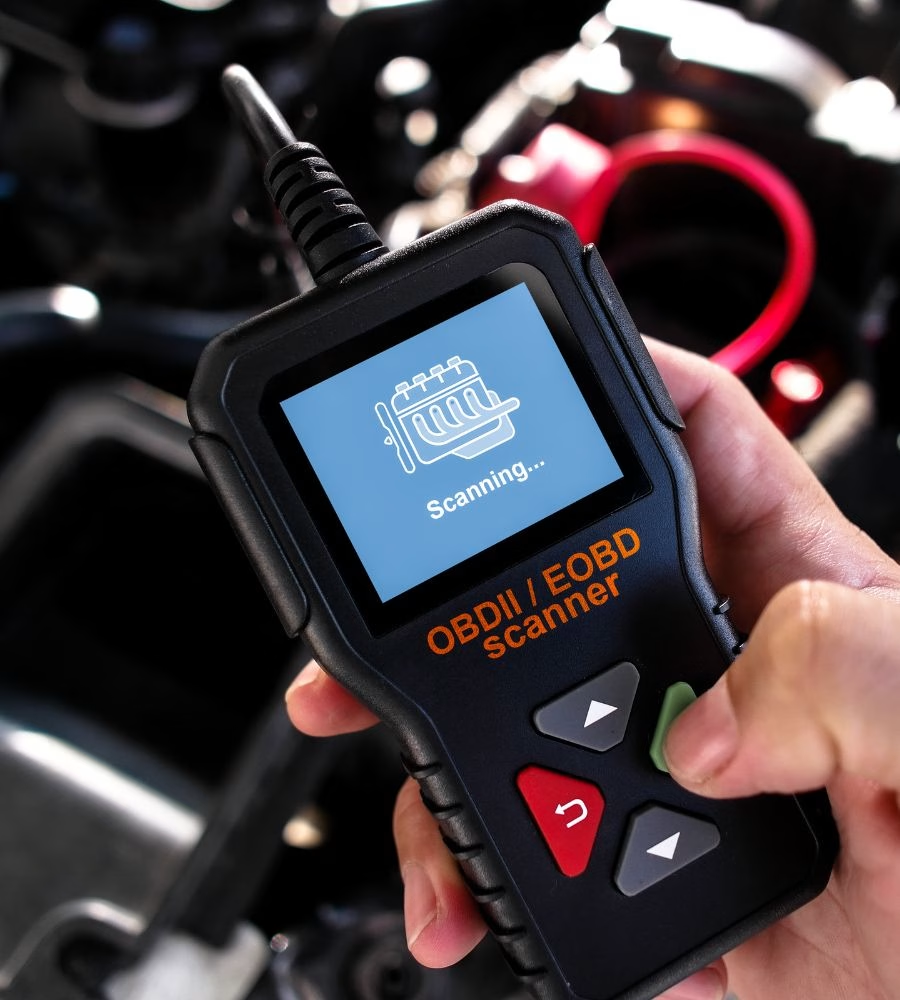
The most reliable method to diagnose the exact issue uses an OBD-II scanner. This tool reads error codes from your car’s ECU and provides specific information about which component is causing the problem.
The scanner identifies issues like faulty fuel injectors, damaged fuel pumps, or sensor problems. Many auto shops offer free scanning, or you can purchase a scanner for self-diagnosis.
Physical Inspection and Signs
Beyond diagnostic scanning, physical signs indicate the need for deeper inspection:
- Poor Engine Performance: Rough running, stalling, or hesitation during acceleration strongly indicates fuel system or component malfunction
- Increased Fuel Consumption: Sudden fuel efficiency drops may signal clogged or malfunctioning injectors
- Check Engine Light: When accompanied by the check injection warning, professional mechanic inspection is advisable
- Visual Inspection: Check for obvious issues like loose connections, damaged wires, oil spots, or unusual noises under the bonnet
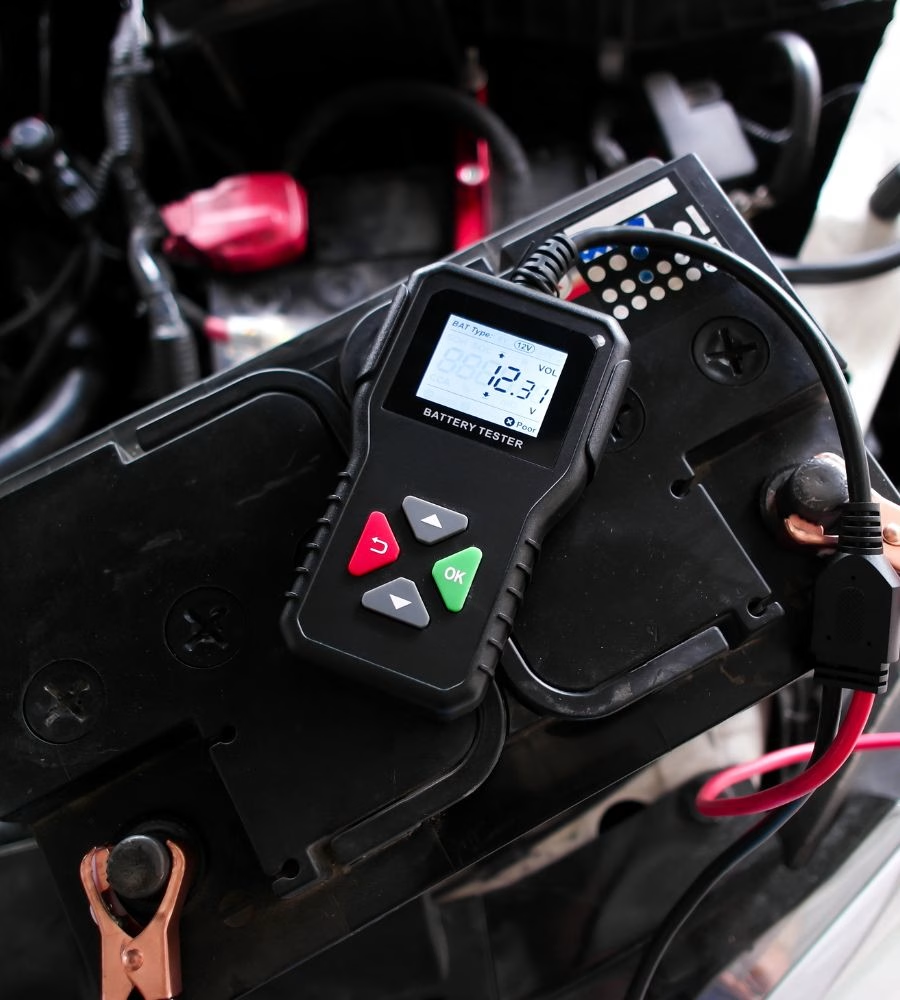
- Battery Check: Observe if cabin lights dim while starting the engine
- Turbo Movement: Check if the turbocharger control linkage moves freely by hand and within seconds after starting
Professional Diagnosis
If you lack diagnostic equipment or cannot interpret results, consult a professional. A Renault specialist can accurately diagnose injection faults and anti-pollution system problems. Professional diagnosis is essential for complex issues like high-pressure fuel pump failure or electronic injection system faults requiring specialized equipment.
How to Fix the “Check Injection System” Fault in Your Renault?
Once you’ve identified the problem, follow these solutions to resolve the warning:
1. Clean or Replace Fuel Injectors
If injectors are clogged with carbon deposits, clean them using injector cleaner or professional ultrasonic cleaning. For mechanically failed injectors, replacement with high-quality OEM parts is necessary. Clean the injector nozzles if possible, or opt for full replacement.
2. Clean or Replace EGR Valve
Remove and clean the EGR valve to remove carbon buildup. If cleaning doesn’t resolve the issue, replace with a new valve. Remember that EGR valves from 2003 onward require ECU reconfiguration after replacement. Some owners rotate the EGR valve 120 degrees to block exhaust fume inlet as a temporary solution.
3. DPF Regeneration or Replacement
For clogged DPF, drive on the highway at sustained speeds to allow regeneration. If this doesn’t work, have a forced regeneration performed by a mechanic ($300-$500). Severely clogged filters require replacement ($1,500-$3,000).
4. Replace Faulty Sensors
Replace malfunctioning MAP sensors, MAF sensors, exhaust pressure sensors, oxygen sensors, or fuel pressure sensors. Remove the old sensor and install the new one, ensuring proper connection. Reset the ECU after replacement to clear error codes.
5. Repair Fuel Pump
If the fuel pump is failing, replace it with a new one to restore proper fuel flow to the engine. Ensure the fuel tank has adequate fuel level before diagnosing pump issues.
6. Fix Electrical Issues
Inspect wiring and connectors for visible damage, particularly in PVC conduit areas prone to rubbing. Tighten loose connections and replace damaged wires. If the issue involves a sensor, replace it and clear error codes from the ECU.
7. Replace Fuel Filter
Change clogged fuel filters with OEM parts. Drain water from the fuel filter if contamination is suspected. Regular filter replacement prevents fuel delivery problems.
Step-by-Step Reset Procedure
After fixing the underlying issue:
- Use an OBD-II scanner to clear fault codes from the ECU
- Some Renault models require specific ECU resets after component replacement
- Turn the ignition off, wait 30 seconds, then restart
- If the warning returns immediately, the issue isn’t fully resolved
- Drive the vehicle to ensure normal operation without warning reappearance
Model-Specific Check Injection Problems
Different Renault models experience specific issues:
- Renault Captur: Common causes include fuel injector issues, DPF problems, EGR valve failures, and sensor faults. Regularly clean or replace the DPF and check injectors for clogs. On diesel versions, DPF faults and EGR valve issues frequently cause the check anti-pollution system message.
- Renault Mégane: Focus on fuel injectors, fuel pumps, electrical connections, EGR valve cleaning, and turbocharger system inspection. Inspect wiring thoroughly for wear and replace faulty components. The 1.5 DCI models commonly experience these faults at high speeds or above 3000 RPM.
- Renault Scénic: This model often has issues with fuel contamination, sensor failure, EGR valve problems, and DPF clogging. Regularly change fuel filters and check sensors like oxygen or MAP sensors. Check injection warnings combined with limp mode indicate serious faults requiring immediate diagnosis.
- Renault Clio 1.5 DCI: Common issues include clogged fuel injectors, faulty fuel pump, blocked DPF, and EGR valve problems. Clean or replace the DPF regularly and ensure your fuel system stays clean.
- Renault Laguna: Frequently experiences EGR valve issues, exhaust temperature sensor failures (P242A), turbocharger problems, and limp mode activation. Often shows symptoms during towing or high-load situations.
- Renault Kadjar: Diesel versions frequently experience DPF faults and EGR valve issues causing the check injection message.
- Renault Trafic/Master: Common issues include EGR valve position control problems, glow plug circuit faults, and turbo vacuum valve disconnections. Equipment disconnections commonly trigger check injection warnings.
Prevention Tips for Check Injection System
Regular maintenance prevents check injection system warnings and maintains vehicle reliability:
- Follow Service Schedule: Adhere to recommended service intervals, including oil changes, filter replacements, and system inspections
- Use Quality Fuel: Fill with high-quality diesel or petrol from reputable stations to prevent contamination
- Regular Highway Driving: Diesel models require regular highway driving to allow DPF regeneration
- Monitor Warning Signs: Address unusual noises, smells, or performance changes immediately
- Check Fluid Levels: Maintain proper engine oil, fuel, and coolant levels
- Replace Filters Regularly: Change fuel and air filters with OEM parts at recommended intervals
- Inspect Battery Condition: Test battery voltage regularly and replace when showing signs of weakness
- Clean EGR Valve: Periodically clean the EGR valve, especially if doing short trips or city driving
- Address Issues Promptly: Don’t ignore warning lights—early intervention prevents minor problems from escalating
Conclusion
The “Check Injection System Renault“ warning is an important signal that shouldn’t be ignored. By understanding the common causes and knowing how to diagnose and fix issues, you can maintain your vehicle’s fuel system in top condition.
Regular maintenance, using high-quality fuel, and early detection with diagnostic tools can help prevent these problems from arising. Keep your car running smoothly and avoid costly repairs by staying on top of these easy maintenance steps.