

Leasing a car is one of the most popular ways to drive a new vehicle without the long-term financial commitment of ownership. Lower monthly payments, the ability to upgrade every few years, and access to the latest safety and technology features make leasing genuinely attractive. But beneath those benefits lies a strict legal contract one that carries real financial consequences when its terms are not respected.
Car lease agreements come with a stipulation that you must pay a penalty if you deviate from the agreed conditions. These penalties are not buried surprises or predatory tactics. They are clearly written enforcement mechanisms designed to protect the residual value of the vehicle and compensate the leasing company for losses caused by rule violations. Understanding every clause before you sign is not optional it is essential to avoiding costly surprises at the end of your term.
What Is a Car Lease Agreement?
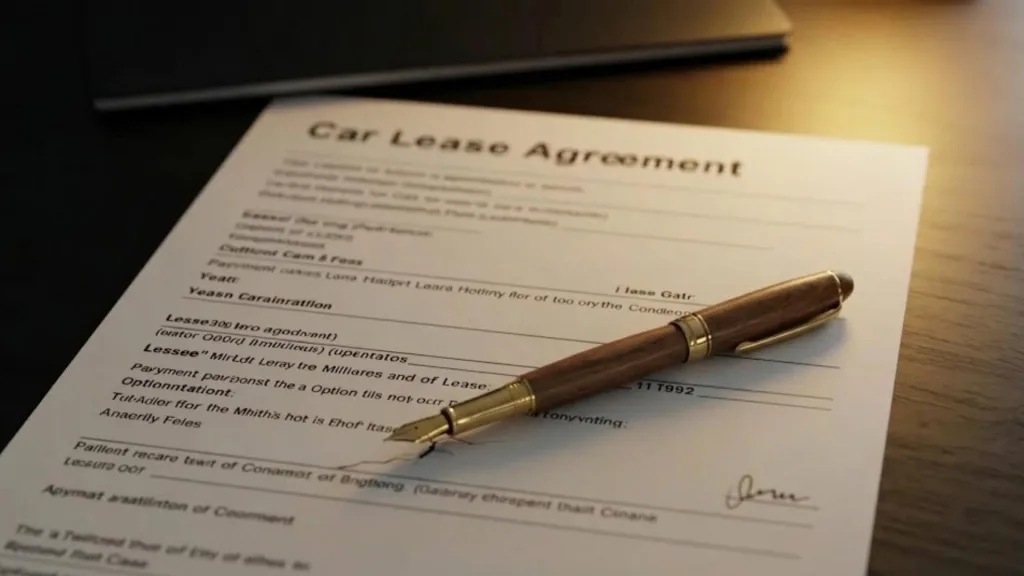
A car lease agreement is a legally binding contract between a lessee (the driver) and a lessor (the leasing company or dealership). Rather than purchasing the vehicle outright, the lessee pays for the portion of the car’s value they consume during the lease period — typically 24 to 48 months.
The agreement spells out:
- The monthly payment amount and total lease term
- An annual mileage allowance
- Acceptable standards for vehicle condition upon return
- Maintenance responsibilities
- Early termination conditions and associated fees
- End-of-lease options, including purchase or return
The Consumer Leasing Act (a federal law) requires lessors to clearly disclose all conditions under which penalties apply, including fees for early termination and excess mileage. Despite this transparency, many drivers sign without reading the fine print — and that is where costly mistakes begin.
Why Penalties Exist in Lease Agreements?
Leasing companies build their business model around one critical assumption: the vehicle will be returned at the end of the term in near-original condition, with a predictable number of miles, so it can be resold at a forecasted residual value. Every penalty clause exists to protect that model.
When a driver exceeds mileage limits, the car depreciates faster than expected. When a driver causes excess damage, the resale value drops. When a driver terminates early, the leasing company loses the income stream it relied upon. Penalties compensate for these disruptions.
Car lease agreements come with a stipulation that you must pay a penalty if you undermine the vehicle’s value in any of these ways. Knowing exactly what triggers those penalties puts the control back in your hands.
The Most Common Penalty Triggers in Car Lease Agreements
1. Exceeding the Mileage Limit
Mileage is the single biggest factor in a used car’s resale value, which is why every lease includes a firm annual cap. Most leases allow between 10,000 and 15,000 miles per year. Going beyond that number triggers a per-mile overage fee, typically ranging from $0.15 to $0.30 per mile, depending on the leasing company.
That rate may seem minor, but the numbers compound quickly:
- 5,000 miles over the limit at $0.25/mile = $1,250 owed at return
- 2,000 miles per year over a 3-year lease at $0.25/mile = $1,500 total
What makes this penalty particularly frustrating is that it is rarely negotiable. By the time the car is returned, the excess mileage has already reduced the vehicle’s market value — the damage is done. The only effective defense is to estimate your annual driving accurately before signing and to choose a mileage plan that reflects your real-world habits, not an optimistic guess.
If you realize mid-lease that you are trending over your limit, some leasing companies offer mid-lease mileage packages at a discounted per-mile rate compared to the end-of-lease penalty rate. Acting early almost always saves money.
2. Early Termination of the Lease
Breaking the lease before the scheduled end date is typically the most expensive mistake a lessee can make. Leasing companies structure their finances around recovering the vehicle’s depreciation over the full term. An early exit disrupts that plan entirely.
Most lease agreements impose an early termination fee that can include:
- All remaining monthly payments in full
- An administrative early termination charge
- Any excess mileage or wear charges accrued to that point
- The difference between the vehicle’s current market value and its actuarial lease balance
For example, if you have 10 months left on a $400/month lease and terminate early, you could immediately owe $4,000 or more, before any other charges are added.
Under the federal Consumer Leasing Act, leases must clearly disclose early termination conditions. The New York State Attorney General’s office also notes that early termination charges must be “reasonable” and cannot include excess mileage fees if the vehicle is returned before the full lease term ends. State-level protections do exist, but they do not eliminate the cost — they only limit certain charges from becoming unreasonable.
If financial hardship makes continuing the lease impossible, contact your leasing company directly. Many will offer reduced penalties, deferred payments, or lease restructuring options before resorting to full termination charges.
3. Excess Wear and Damage
Normal wear and tear is an accepted part of leasing. Small stone chips, light scuffs on door edges, and minor tire tread reduction from regular use are generally not charged at lease return. The problem begins when the vehicle comes back with damage that meaningfully reduces its resale value.
Damage that typically triggers excess wear penalties includes:
- Deep scratches, major dents, or body panel damage requiring professional repair
- Cracked or chipped windshields
- Interior tears, stains, or burn marks on upholstery
- Broken or missing components (trim pieces, knobs, covers)
- Tires worn below minimum tread depth
- Cracked or broken lights and mirrors
Leasing companies use “excess wear and use” guidelines — written standards that define exactly what is acceptable. These guidelines are usually available from the leasing company before your return appointment. Requesting a copy and comparing it against the car’s current condition is a smart step to take several months before your lease ends.
Proactively fixing minor damage before return almost always costs less than the leasing company’s repair charges, which are often priced at retail rates.
4. Unauthorized Vehicle Modifications
Leased vehicles are not owned by the driver — they belong to the leasing company. Making modifications without written authorization is a direct breach of the lease agreement.
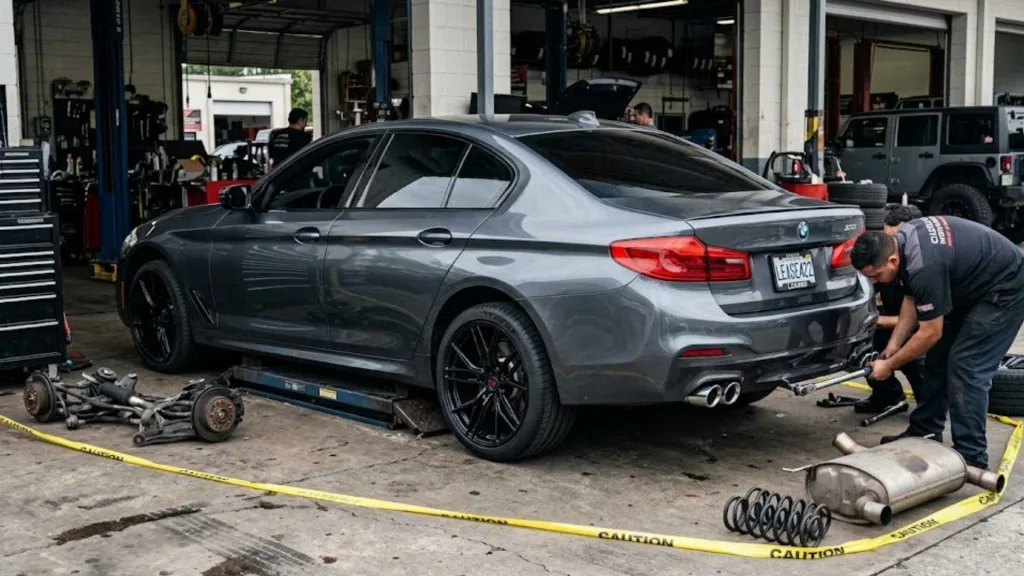
Unauthorized modifications that commonly trigger penalties include:
- Aftermarket wheels or suspension modifications
- Window tinting beyond permitted levels
- Non-factory audio or electronic installations
- Custom paint jobs or vinyl wraps
- Engine or performance modifications
Even modifications that seem minor or reversible can trigger penalties if they alter the vehicle’s original specification. Always request written approval from the leasing company before making any change to the vehicle.
5. Missed or Late Payments
Car lease agreements come with a stipulation that you must pay a penalty if you miss scheduled payments. Late payment fees are typically outlined clearly in the agreement and can range from a flat fee to a percentage of the monthly payment.
Repeated late payments have additional consequences:
- Damage to your credit score if the default is reported to credit bureaus
- Risk of lease cancellation and repossession of the vehicle
- Additional administrative fees tied to the collection process
New York State law provides a 10-day grace period before a late charge can be assessed, and allows a lessee to reinstate a canceled lease once during the lease term — but these protections vary by state. Setting up automatic payments is the simplest way to avoid this category of penalty entirely.
6. Failure to Maintain the Vehicle
Lessees are responsible for keeping the vehicle in proper mechanical condition throughout the lease. This typically means following the manufacturer’s recommended maintenance schedule for oil changes, tire rotations, filter replacements, and other routine services.
Neglecting maintenance can result in:
- Mechanical damage that exceeds normal wear classifications
- Penalty charges at return for maintenance-related deterioration
- Voided manufacturer warranty coverage that the leasing company depends on
Keeping detailed service records is important. If a dispute arises at lease return, documented maintenance history demonstrates responsible care of the vehicle.
Open-End vs. Closed-End Leases: How Penalties Differ
Most consumer car leases are closed-end leases. Under this structure, if the vehicle’s actual market value at lease end is lower than the residual value stated in the agreement, the leasing company absorbs that difference. Your obligation is limited to mileage overages and wear charges.
Open-end leases are more common in commercial or fleet contexts. Here, if the vehicle’s appraised value at lease end falls below the estimated residual value stated in the contract, the lessee is responsible for paying that shortfall as an end-of-lease payment. The Washington State Attorney General’s office notes that open-end lessees may receive a refund if the actual value is higher than estimated — but the reverse also applies.
Understanding which type of lease you are signing is critical to understanding your full financial exposure.
How to Minimize Lease Penalties Before They Happen?
The best time to protect yourself from lease penalties is before you sign the agreement. A few proactive steps can prevent significant costs later.
- Choose the right mileage plan from the start. Be honest about your commute, road trips, and weekend driving. Paying for a higher mileage allowance upfront — say, 15,000 miles per year instead of 10,000 — is almost always cheaper than paying per-mile overage fees at return. Many drivers underestimate how quickly miles accumulate.
- Read every section of the agreement, not just the monthly payment. The penalty and fee sections are just as important as the payment terms. Ask the finance manager to explain any clause you do not fully understand before signing. All promises should be confirmed in writing within the agreement itself.
- Track your mileage quarterly. Regularly checking your odometer against your lease allowance gives you time to adjust driving habits or explore mid-lease mileage additions before the overage becomes unmanageable.
- Inspect the car regularly and address damage promptly. Small dents and scratches are far cheaper to repair through an independent body shop than through the leasing company’s end-of-lease assessment. Proper car care throughout the lease term protects you from excess wear penalties.
- Understand your exit options before you need them. Some leasing companies allow lease transfers (also called lease assumptions), where another qualified driver takes over your contract. Transfer fees are typically far less than early termination fees. Knowing this option exists — and how to access it — before a financial change forces the issue can save thousands.
What Happens at Lease Return?
When your lease term ends, the leasing company will schedule a return inspection. This is typically a structured walkthrough of the vehicle’s exterior, interior, tires, and mechanical condition. Inspectors use written “excess wear and use” guidelines to determine what charges apply.

At this point:
- Excess mileage charges are calculated based on the final odometer reading
- Damage beyond normal wear is assessed and priced for repair
- A disposition fee (a charge for processing the vehicle return) may also apply
If you are considering purchasing the vehicle at lease end, the purchase price (residual value) should have been disclosed when the original lease was signed. Comparing that residual value to current used-car market pricing — using resources like Kelley Blue Book or Edmunds — helps determine whether a buyout makes financial sense.
A Final Word on Reading Before You Sign
Car lease agreements come with a stipulation that you must pay a penalty if you fail to meet Car lease agreements come with a stipulation that you must pay a penalty if you ignore these steps and sign without full awarenes, so understanding the contract is crucial. Before signing, review a sample lease, compare offers from different dealers, clarify mileage and wear policies, and ensure verbal promises appear in writing.
A few hours of careful review can prevent costly surprises at lease-end. Maintaining the vehicle well—through regular servicing, careful driving, and inspections—helps minimise penalties, protects your investment, and ensures a smoother, more cost-efficient leasing experience overall. Resources like Arnones Car Care can help you stay on top of your vehicle’s condition so that when the return day comes, you walk away without unexpected bills.