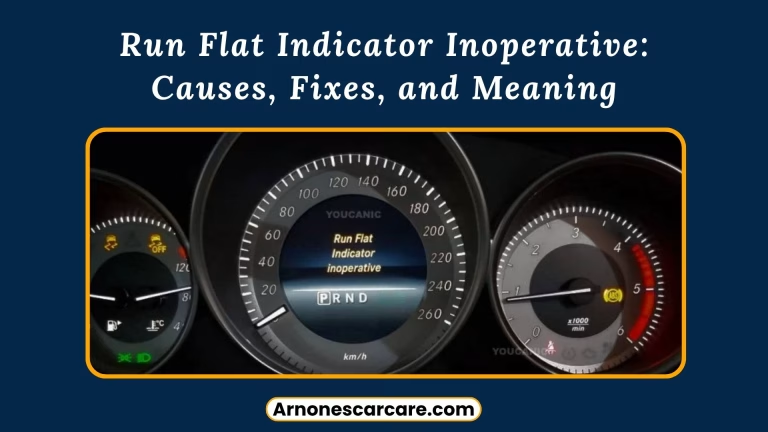

A “Nissan Qashqai System Fault” warning in your Nissan Qashqai signals issues with key systems such as the battery, brake pedal sensor, Body Control Module (BCM), or sensors. These faults commonly arise from battery deterioration, sensor malfunctions, wiring problems, or BCM glitches, as highlighted by dashboard alerts.
Understanding the warning lights and their meanings helps diagnose the root cause. Solutions range from replacing batteries and sensors to resetting the BCM or addressing wiring damage. By using diagnostic tools like an OBD-II scanner and performing targeted troubleshooting, you can resolve many system faults efficiently.
What Does “System Fault” Mean in Nissan Qashqai?
The “System Fault” warning in your Nissan Qashqai indicates that a malfunction has been detected in one or more vehicle systems. It could involve features like the Stop/Start system, Intelligent Emergency Braking (IEB), or radar sensors. Pay attention to any specific messages or symbols displayed to pinpoint the issue.
Can You Drive with System Fault Warning?
You can usually continue driving cautiously, but monitor for performance changes, unusual noises, or issues like dim headlights. If problems persist, such as low battery or strange smells, stop safely. A chassis control fault is particularly serious and may limit your speed, requiring prompt attention.
Common Vehicle System Warning Messages and Their Meanings
Modern vehicles are equipped with advanced safety and diagnostic systems designed to keep you informed about your car’s condition. When something goes wrong, warning messages and symbols appear on the dashboard to alert you. Understanding what these messages mean can help you address issues promptly and avoid costly repairs or safety risks.

Below are some of the most common system fault messages and what they typically indicate:
- Master Warning (Yellow Triangle with Exclamation Mark): This symbol usually means that one or more vehicle alert systems are not working properly. It’s a general warning that should not be ignored.
- Engine Warning Light (Orange Indicator): Often referred to as the check engine light, this signal points to a possible issue within the engine control system or a misfire occurring in the engine.
- System Fault (Shown on Certain Dashboards): This alert may appear when there’s a malfunction in systems like the Rear Cross Traffic Alert (RCTA) or Intelligent Emergency Braking (IEB).
- Rear Cross Traffic Alert (RCTA) Warning: If this message pops up, it means the RCTA system isn’t functioning correctly. This could be due to a faulty sensor or an internal system problem.
- Intelligent Emergency Braking (IEB) Warning: This alert indicates that the IEB system has a fault, possibly caused by a sensor issue or a malfunction in the braking assistance components.
- ABS (Anti-lock Braking System) Warning: A fault in the ABS system can impact braking efficiency and vehicle safety. If this light comes on, it means the ABS isn’t operating as intended. For more precision, take references from different service types, like Honda B123 Service or Mercedes B9 Service, which might explore maintenance insights.
Common Causes of Nissan Qashqai System Faults
Multiple factors can trigger system fault warnings in the Nissan Qashqai. Understanding these causes helps you diagnose and address issues effectively.
| Cause | Symptoms | Solutions |
| 1. Battery Issues | – Difficulty starting engine- Dim headlights- Warning lights- Malfunctioning electronics- Stop/start system warning | – Replace battery if voltage < 12.6V- Clean terminals with baking soda and water- Charge battery- Secure loose terminal connections |
| 2. Body Control Module (BCM) Faults | – Changing system fault messages- Random warning lights- Malfunctioning interior lights, door locks, windows- Disabled stop/start system | – Reset BCM by disconnecting battery for 10 minutes- Check 140-amp fuse terminal- Reprogram or replace BCM if reset fails- Professional diagnosis |
| 3. Stop/Start System Faults | – Inactivity of stop/start system- Error codes related to brake pedal- System deactivates during use- Warning light (A and arrow symbol) | – Replace faulty brake pedal sensor- Check alternator charging- Replace weak/old battery- Inspect for physical sensor damage |
| 4. Forward Emergency Braking (FEB) and Radar Issues | – FEB warning light illuminated- Forward collision warning light- System unavailable messages | – Clean sensor area on front bumper- Remove blocking material (dirt, snow, ice)- Restart engine- Professional FEB system check if warning persists |
| 5. Chassis Control System Faults | – Limited speed (as low as 5 MPH)- Braking performance issues- Reduced drivability | – Reset system by disconnecting battery for 10 minutes- Check for corroded or loose battery terminals- Inspect alternator- Professional diagnosis |
| 6. Engine Control Unit (ECU) Issues | – Engine misfiring or stalling- Electrical inconsistencies- Fault codes (U1000, U1001) | – Inspect ECU for wear or water damage- Update ECU software- Repair or replace damaged components- ECU reflash if outdated |
| 7. Wiring and Electrical Problems | – Burning smell from wires- Unresponsive systems- Multiple unrelated system faults | – Inspect for damaged or burnt wiring- Check connectors for corrosion- Repair or replace faulty wires- Secure connections |
| 8. ABS and Wheel Speed Sensor Issues | – ABS warning light- Multiple system faults- Traction control disabled- Stop/start system not working | – Inspect ABS sensors- Clean sensors and connections- Replace faulty sensors- Check wiring for damage |
| 9. Sensor Malfunctions | – Malfunctioning parking sensors- Blocked front camera- Disabled sensors | – Clean sensors and cameras regularly- Check for physical sensor damage- Replace faulty sensors- Ensure sensors aren’t obstructed by debris |
| 10. Alternator Failure | – Battery light illuminated- Chassis warning light- Loss of power steering and brakes- System shutdowns | – Test alternator professionally- Replace alternator- Test battery voltage under load- Inspect charging system |
| 11. Exhaust Pressure Sensor Issues | – “Exhaust Pressure Circuit A” error code- System fault warning- DPF-related issues | – Confirm fault with diagnostic reader- Inspect and replace pressure sensor- Clean or replace pressure differential tube |
This table provides an overview of the most common issues and guides you through their identification and solutions. For more, explore service insights, such as Honda B13 Service Checklist or Mercedes A5 Service.
How to Diagnose Nissan Qashqai System Faults?
Proper diagnosis helps identify the specific issue causing system fault warnings.
Step 1: Check Dashboard Warning Lights
Examine the dashboard carefully for any illuminated warning lights. Note the specific system fault message displayed, including any pictograms or phrases. If pictograms keep changing, this indicates battery or BCM issues rather than a specific system fault.
Record what appears between “Warning” and “System Fault” as this provides crucial diagnostic information.
Step 2: Check Battery Voltage
Battery issues cause the majority of system faults. Test battery voltage using a voltmeter:
- Voltage should be around 12.5V with engine off
- Voltage shouldn’t drop below 10V when starting
- If voltage drops significantly, battery needs replacement
- Check terminals for corrosion or loose connections
Step 3: Use an OBD-II Scanner
Connect an OBD-II scanner compatible with Nissan vehicles to the diagnostic port (typically under the dashboard). Retrieve error codes to identify specific components causing the fault.
Common Fault Codes:
- U1000/U1001: CAN communication circuit faults
- B2193: BCM-ECM communication issues
- B27D1: Relay start cut-off deactivated
- Various sensor-specific codes
Generic OBD scanners may not provide complete information for Nissan-specific faults. Nissan dealers use proprietary diagnostic equipment that identifies issues more accurately.
Step 4: Visual Component Inspection
Check vehicle components thoroughly:
- Battery terminals for corrosion or loose connections
- Wiring for damage, burns, or disconnections
- Sensors for dirt, damage, or obstruction
- Front radar and camera areas for blockages
- Fuses, particularly the 140-amp battery fuse terminal
- Brake pedal sensor for disconnection or damage
Step 5: Test Individual Systems
If specific systems show faults, test their operation:
- Try starting the engine (listen for starter motor)
- Turn on the fan
- Test headlights
- Check if key fob activates central locking
- Test stop/start functionality
If any of these don’t work with ignition on, check the battery fuse terminal and connections in the engine compartment. You may even uncover insights by comparing diagnostics and maintenance tips from Honda A13 Service or troubleshooting systems related to fuel injection system.
How to Fix Nissan Qashqai System Faults?
Once you’ve diagnosed the issue, follow these solutions:
Solution 1: Battery Replacement or Charging
If battery voltage is low or the battery is over 3-5 years old:
- Replace battery with appropriate stop/start compatible battery
- Clean terminals using baking soda and water
- Tighten all connections securely
- Charge battery if it’s in good condition but voltage is low
Solution 2: Reset Body Control Module (BCM)
For BCM glitches or multiple changing system faults:
- Turn off the vehicle
- Locate the 12V battery in the battery compartment
- Disconnect negative terminal first, then positive terminal
- Wait 10 minutes
- Drain residual power by honking horn or turning on lights
- Reconnect positive terminal first, then negative
- Start engine and verify error messages have cleared
Note: This resets both ECU and BCM. All vehicle settings will reset to default (radio presets, clock, etc.).
Solution 3: Clean Sensors and Radar
For front radar obstruction or camera faults:
- Clean front bumper sensor area and badge thoroughly
- Clean rear sensors and cameras
- Remove dirt, snow, ice, or debris
- Restart engine to see if warning clears
- If warning persists, sensor may need replacement

Solution 4: Replace Faulty Sensors
For confirmed sensor failures:
- Replace brake pedal sensor
- Replace wheel speed/ABS sensors
- Replace exhaust pressure sensor
- Replace parking or proximity sensors
- Use OEM parts for best compatibility
Solution 5: Repair Wiring Issues
For electrical problems:
- Inspect entire wiring harness, especially in high-wear areas
- Check for chopped or damaged sensor wiring
- Repair or replace damaged wires
- Secure all connectors properly
- Address any corrosion with electrical contact cleaner
Solution 6: Replace Alternator
If alternator is confirmed faulty:
- Have alternator professionally tested
- Order replacement (not typically in stock)
- Professional installation recommended
- Test charging system after installation
Solution 7: Professional Diagnosis and Repair
For complex or persistent issues:
- Visit Nissan dealer for proper diagnosis using original Nissan scanners
- BCM reprogramming or replacement
- ECU software updates
- Multiple system diagnostics
- CAN bus communication troubleshooting
Cost to Fix Nissan Qashqai System Faults
Repair costs vary depending on the underlying issue:
- Diagnosis: £100-£150 at independent garages, often more at dealerships
- Battery Replacement: £100-£200 for stop/start compatible battery
- Sensor Replacement: £50-£150 per sensor plus labor
- BCM Reset: Free if DIY, £50-£100 at garage
- BCM Replacement/Programming: £300-£600+ (expensive component)
- Alternator Replacement: £300-£500 including parts and labor
- Wiring Repairs: £100-£300 depending on extent of damage
- Software Updates: £50-£150 at dealer
Complex issues involving multiple systems or BCM replacement can cost £300-£600 or more. Always get proper diagnosis before committing to expensive repairs. For example, costs detailed in Honda A14 Service Cost Checklist might help you estimate variables in service expenses.
Preventative Maintenance to Avoid System Faults
Minimize system fault occurrences with regular maintenance:
- Replace battery every 3-5 years before it fails
- Keep sensor areas clean (front radar, cameras, parking sensors)
- Follow manufacturer’s maintenance schedule
- Address minor issues promptly before they escalate
- Maintain proper fluid levels
- Use quality fuel from reputable stations
- Regularly inspect electrical connections for corrosion
- Perform periodic BCM reset if minor glitches appear
- Have alternator charging system tested annually
- Keep vehicle software up to date
Additionally, taking care of vital components, such as the role of the alternator, keeps the electrical systems and sensors functioning correctly.
FAQs
Q. What causes the Nissan Qashqai System Fault?
The system fault could be due to issues with the battery, brake pedal sensor, engine control unit (ECU), or wiring problems. It’s important to diagnose the issue using an OBD-II scanner or consult a mechanic.
Q. How can I fix the Stop/Start System Fault in my Nissan Qashqai?
To fix this, start by checking the battery, brake system, and engine temperature. If issues persist, use a diagnostic tool to scan for error codes, and consider visiting a professional mechanic if needed.
Q. What is the significance of the Stop/Start System malfunction?
The Stop/Start System helps save fuel by turning off the engine when the car is idling. A malfunction could prevent the system from functioning, leading to issues with engine startup or stop functions.
Q. When should I consult a mechanic for a Nissan Qashqai System Fault?
If the warning lights stay on, there’s unusual engine behavior, or the issue doesn’t resolve with basic troubleshooting, it’s time to consult a qualified mechanic for professional diagnosis and repair.